NeighborhoodLincoln Park, Chicago
Lincoln Park homes with more than one Sub-Zero
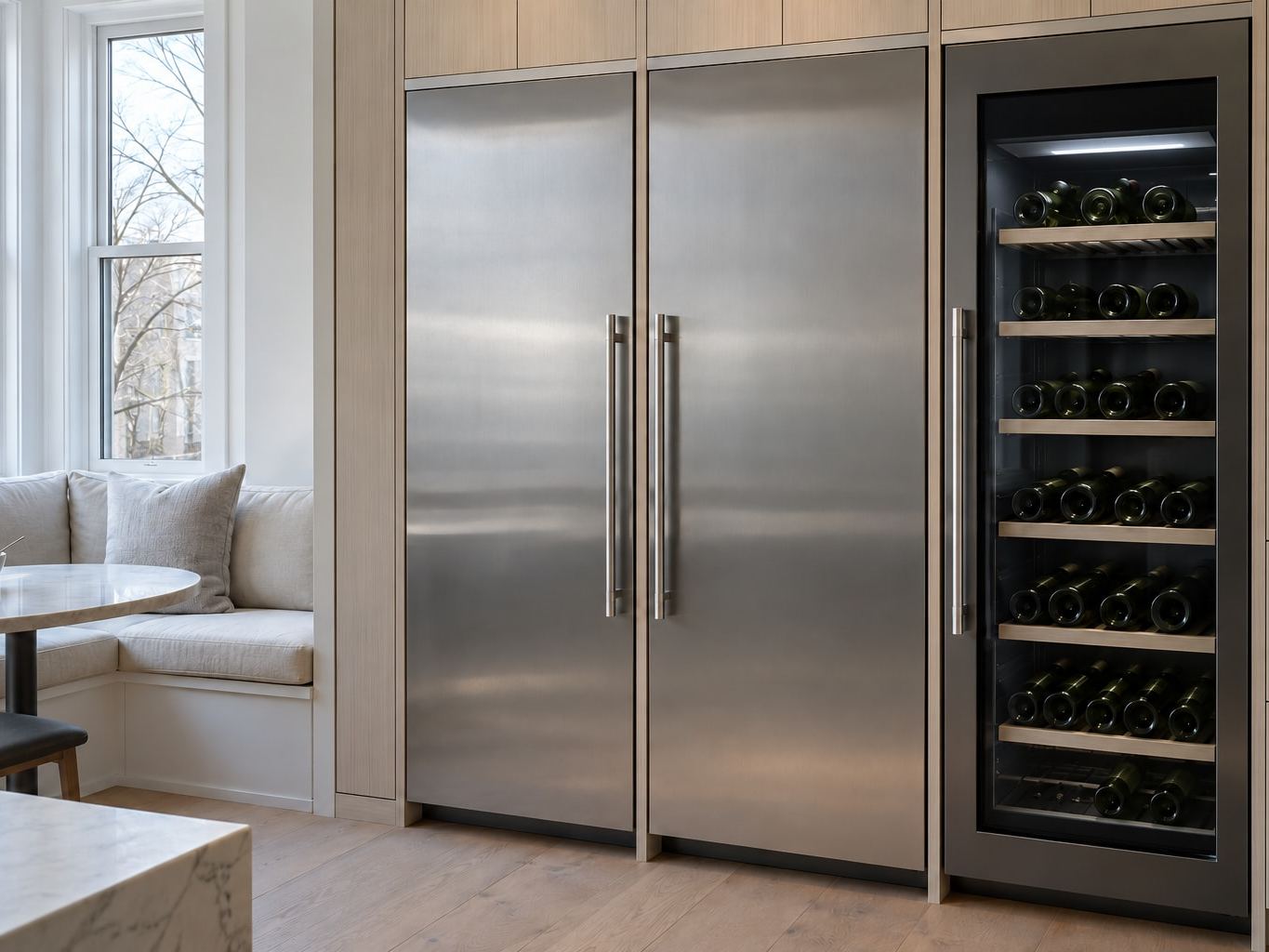
North of the Gold Coast line, Lincoln Park trades towers for greystones, townhouses and family houses, and those houses rarely hold just one cold appliance. A column pair in the kitchen, drawers in the island and a wine unit downstairs is a normal setup here, so we plan a visit around the whole house, not a single box.
4.9 out of 5 from 150 client reviews Rating details
Where in Lincoln Park we usually end up
The neighborhood stretches from the edge of the Gold Coast up past Fullerton, with the lakefront on one side and DePaul's blocks on the other. Housing changes every few streets, and each type puts its Sub-Zero units in different places.
-
Around Fullerton
Big single-family houses and renovated greystones on and off Fullerton. Kitchens were often rebuilt from scratch, which is where the paired refrigerator and freezer columns behind custom panels tend to live.
-
The lakefront edge
Residential buildings facing the park and the lake, closer in feel to the towers further south. Units here are usually one built-in refrigerator plus a wine column, and the building wants notice before a contractor comes up.
-
Near the Gold Coast border
The southern blocks run straight into our home neighborhood, so the drive is short. For homes just over the line, see the Gold Coast page; the way we work is the same.
-
DePaul and the side streets
Townhouses and newer three-flat conversions around the DePaul area, where the kitchen is on one floor and a bar or family room with undercounter units is on another. We cover these blocks even though they have no page of their own.
-
Modern townhouse rows
Newer townhouses with roof decks and lower-level media rooms. A beverage drawer in the basement and a refrigerator column on the main floor are often installed by different trades, so their clearances and power runs are worth a look while the technician is there.
One house, several units: what gets checked where
When the technician walks a Lincoln Park house, each room raises its own questions. This is the order we usually go in and what we look at in each spot.
| Where it stands | Usual Sub-Zero unit | What the technician looks at |
|---|---|---|
| Main kitchen wall | Refrigerator and freezer columns side by side, or one built-in | Door seal contact along the full panel, top grille airflow, condenser dust, temperature in both cabinets |
| Kitchen island | Undercounter refrigerator or freezer drawers | Front toe-kick vent kept clear, drawer slides and seals, how the drawers sit level under a heavy stone top |
| Butler's pantry or dining room | Wine column or undercounter wine unit | Zone temperatures against the display, vibration, glass door seal, fan noise in a quiet room |
| Lower level bar or media room | Beverage center or undercounter drawers | Room temperature through the seasons, a level floor, the dedicated outlet, and whether the unit has room to breathe |
| Ice station | Built-in ice maker or the ice maker inside a freezer column | Water supply, filter age, ice size and output, drain path if the unit has one |
| Roof deck or patio | Undercounter unit outside | Whether the model is rated for outdoor use at all; an indoor unit placed outside works far harder than it should |
Paired columns or one combination unit: what changes at repair time
Lincoln Park kitchens split roughly between two layouts. Neither is better in every way, but they behave differently when something goes wrong, and that shapes how a visit runs.
Refrigerator and freezer columns side by side
- Two separate appliances, each with its own compressor, controls and sealed system
- If the freezer column fails, the refrigerator column keeps running and can take some of the frozen food for a while
- Each column has its own door seal and hinge set, so a sagging panel on one does not affect the other
- Two condensers to keep clean instead of one, usually behind the top grilles
- Parts are ordered per column, so the technician notes both model and serial numbers
One combination built-in
- Refrigerator and freezer share one cabinet and one control panel
- Depending on the model, the two sections may share some components, so one fault can show up on both sides
- One condenser to keep clean and one unit to pull out if the repair needs it
- Easier to describe on the phone: one model number, one set of symptoms
- When the whole unit stops, every shelf of food needs a plan at once
For a repair visit the practical difference is food planning and parts. With columns we can usually keep one side cold while the other is worked on; with a combination unit we plan around the whole cabinet. Either way, one $89 visit covers both.
Repairs by appliance for Lincoln Park houses
Every unit in the house has its own page with the faults we see most and what a repair involves.
- Refrigerators and refrigerator columns
Warm shelves, frost on the back wall, water under the crisper, clicking or humming from the top.
- Freezer columns and drawers
Soft ice cream, heavy frost, a compressor that never seems to stop.
- Wine storage
Zones drifting from their setting, vibration, fogged glass or a display that no longer responds.
- Undercounter units
Island drawers, bar refrigerators and beverage centers that run warm or will not close cleanly.
- Ice makers
No ice, small or hollow cubes, a slow trickle or water where it should not be.
- Maintenance visit
Condenser cleaning and a check of seals and temperatures for every unit in the house in one trip.
What Lincoln Park families ask before booking
- Only my freezer column stopped working. Will you need to move the refrigerator column too?
- Usually not. Each column is a separate appliance, so the technician works on the one that failed. If the repair means sliding the freezer out, the panels and the neighboring column are protected and stay in place.
- Is there anywhere to park for a repair visit in Lincoln Park?
- Street parking varies block by block. If you have a garage, an alley pad or a spot in front that we can use, mention it when you book; it makes carrying parts and tools to the kitchen much quicker.
- My wine unit is in the basement and runs constantly. Is that normal?
- Not usually. A lower-level unit that never cycles off often has a blocked vent, a dusty condenser or a seal that is not closing. Look at the wine storage page for common causes, then call us if it continues.
- Do you also cover Old Town and the lakefront buildings next to Lincoln Park?
- Yes. Old Town is just south, and the high-rises along the Lake Shore Drive corridor are part of our area too. The visit fee and hours are the same everywhere we work.
- Can I have every unit in the house checked even if only one is acting up?
- Yes, and in a house with several units it is a sensible use of the trip. The technician can look over seals, condensers and temperatures on the others while there. The cost of any work beyond the visit is explained before it starts.