NeighborhoodRiver North
Sub-Zero repair for River North lofts and riverfront towers
River North puts a converted warehouse and a new glass tower on the same block, and a Sub-Zero behaves differently in each. Knowing which one you live in tells us half of what to check before we ring the bell.
4.9 out of 5 from 150 client reviews Rating details
Two kinds of building, two kinds of trouble
Much of River North was built for industry and storage long before anyone pictured a refrigerator column in it. When those buildings became lofts, kitchens were dropped into open floors wherever the plan allowed: against a brick party wall, under a run of tall factory windows, or inside an island far from the original plumbing. Sub-Zero units in these spaces work, but they often work against the room.
A few blocks away, the newer towers along the Chicago River were designed with modern kitchens from day one. Their weak points are different: sealed glass, building-controlled water and power, and strict rules about who can work inside. A repair there is as much about access as about the cooling system.
Neither type is worse. They simply fail in different ways, and a technician who treats a loft like a condo, or the other way round, can chase the wrong part. Telling us your building type when you call is the single most useful thing you can do before a visit.
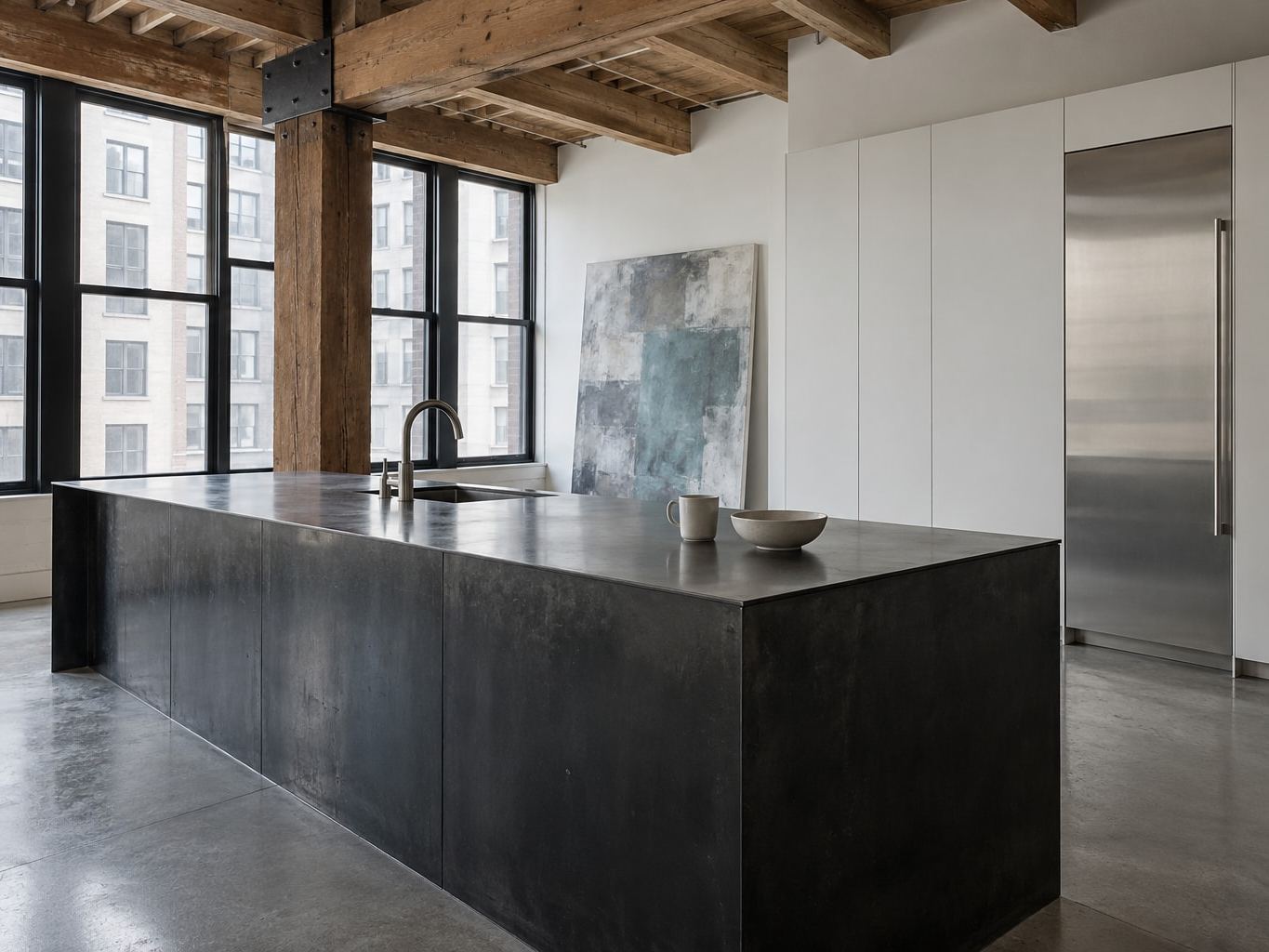
Warehouse loft or new high-rise: what changes for your Sub-Zero
These are the differences we plan around. Your building may mix both; many lofts have had their wiring or plumbing partly redone.
Converted warehouse loft
- Electrical service retrofitted into an older structure, sometimes with long runs or circuits shared with other kitchen equipment.
- Water lines to the ice maker or dispenser that travel a long way across the floor, often exposed or routed through the island.
- Built-in and integrated units set into custom millwork or freestanding walls, with less clearance at the grille than the install guide expects.
- Large windows that put direct sun on the doors and side panels for part of the day.
- Street parking or a shared alley entrance, sometimes a freight lift operated by the building.
Modern riverfront high-rise
- Dedicated kitchen circuits, but breakers and shutoffs that may sit with building engineering.
- Pressure-regulated water risers; a leak can reach the units below quickly, so the valve matters.
- Standard cabinet openings with integrated columns and island drawers, usually installed to spec.
- Sealed windows and central heating that keep the kitchen warm and the air dry.
- Security check-in, booked freight elevators and set contractor hours.
In a loft we look harder at the power, the water supply and the airflow around the cabinet. In a tower we plan the access and check whether the building's systems are part of the fault. Either way, the diagnosis is done in place and priced before any work.
Where we work in River North
River North is compact, but the homes in it are anything but uniform.
-
Along the Chicago River
Riverfront condominium towers with large kitchens and wine storage in living areas. Afternoon sun off the water reaches deep into these units.
-
The gallery district
Former industrial buildings turned into lofts and live-work spaces, many with island-based undercounter drawers and refrigerator columns in custom walls.
-
Boutique loft buildings
Smaller conversions with a few homes per floor, often no freight elevator and a narrow stair or a small lift to the kitchen.
-
Mixed-use blocks
Residences above restaurants and shops, where deliveries and contractors share one entrance and parking is tight. Mention where our van can stop when you book.
Loft symptoms we see again and again
Older industrial buildings leave fingerprints on how a refrigerator behaves. If one of these sounds familiar, mention it when you call.
- Runs nonstop on sunny afternoons
- Likely cause Direct sun through tall windows heating the doors and cabinet, plus a dusty condenser that cannot keep up See the repair
- Clicks off and restarts when other equipment kicks on
- Likely cause Voltage dips on a shared or long circuit stressing the start components and control board See the repair
- Top shelf warm in a custom niche
- Likely cause Trim or millwork crowding the grille so hot air recirculates around the condenser
- Island drawers stop holding temperature
- Likely cause Toe-kick vent blocked by a rug, a step or trim; condenser fan or drawer gasket worn See the repair
- Small, hollow or slow ice
- Likely cause Low or uneven water pressure on a long supply line, a kinked line or an overdue water filter See the repair
- Moisture beading on the door edges
- Likely cause A gasket that no longer seals, often on a heavy panel-ready door that has settled
River North questions, answered plainly
- Where should your technician park in River North?
- Tell us when you book. If your building has a loading zone, an alley door or a garage space for contractors, that saves time; otherwise the technician uses nearby street or paid parking. Knowing in advance also tells us how far tools and parts have to be carried.
- Will you need to pull my built-in out of the millwork?
- Usually not. Most diagnosis and many repairs on built-in and integrated Sub-Zero units are done from the front. If moving the unit is ever needed, we explain why first and protect the cabinetry and floor.
- Can the problem be my building's wiring rather than the refrigerator?
- It can. We measure what the unit is getting at the outlet while it runs. If the supply is the issue, we tell you so you can bring in an electrician or the building, rather than replacing parts that are not at fault. Our diagnostics page explains how we test.
- How fast can you come to River North?
- Calls are answered 24/7, and visits run daily, 8 AM–6 PM. We often have an opening the same or the next day when the schedule allows; book online to see current times or call us.
- Which other neighborhoods do you cover nearby?
- Our base is the Gold Coast, and we also work in Streeterville, the Magnificent Mile and Old Town, among others.