Sub-Zero repairFresh-food section
Sub-Zero refrigerator repair, one sealed system at a time
A Sub-Zero with dual refrigeration cools the fresh-food side and the freezer side separately, so a warm refrigerator next to a perfectly cold freezer is a common and readable fault. We find which half of the machine is struggling, explain it in plain words and only then fix it.
4.9 out of 5 from 150 client reviews Rating details
What the refrigerator side is showing you
Write down what you see before you call: the readout, the sound, where the water sits. These six patterns cover most of the calls we get for the fresh-food section of a built-in, integrated or freestanding Sub-Zero.
- Fresh-food section drifts above 40°F, freezer still hard-frozen
- Likely cause The refrigerator's own evaporator fan, a temperature sensor (thermistor) or the main board has stopped calling for cold See the repair
- Frost or a sheet of ice on the back wall
- Likely cause Automatic defrost has stopped working (heater, defrost thermostat or timing), or a torn gasket is letting humid kitchen air in
- Water pooling under the crisper drawers or on the floor
- Likely cause A blocked defrost drain, a leaking water inlet valve or a cracked filter housing on models with water service
- Clicking every few minutes, but no cooling
- Likely cause The compressor is trying to start and dropping out: start relay, overload or the compressor itself
- Humming, rattling or grinding from the top grille
- Likely cause A worn condenser or evaporator fan motor, a fan blade touching ice, or a loose panel
- Display blank, frozen or flashing a code
- Likely cause Main control, the display module or a loose harness plug; the code narrows the search but does not replace testing See the repair
How a refrigerator repair visit runs
The order rarely changes, whether the unit sits in a lakefront tower or a row house off Astor Street. What changes is how long each step takes once the technician sees the machine.
-
Booking and building access
You book online or call. If you live in a doorman building, tell us who handles contractors: we arrange the visit with the concierge or property manager, ask about the freight elevator or loading dock, and send whatever notice the management office needs.
-
Testing, not guessing
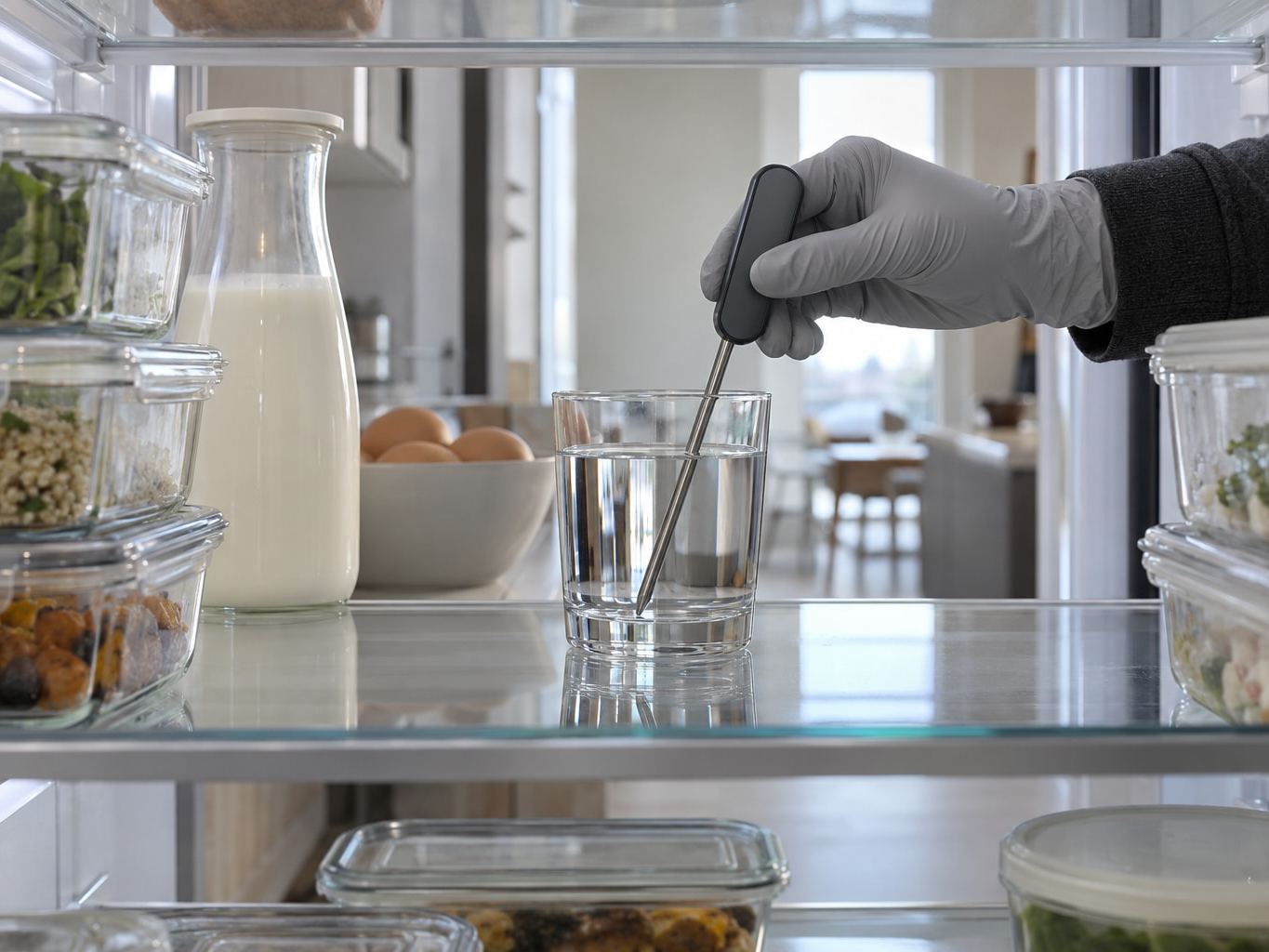
The technician reads the actual temperatures with a probe, listens to the fans and the compressor, checks the condenser, the gaskets and the drain, and tests sensors and the control board. A refrigerator that is warm because of a dirty coil and one that is warm because of a failed fan look identical from the front.
-
A clear estimate before any work
You hear the cause, the part and the cost of the repair before a screw is turned. No wrench comes out until you say yes. Say yes, and the $89 trip charge is subtracted from the repair invoice.
-
The repair itself
Frequently replaced parts are often swapped during that same appointment. When your serial number calls for something less common, we order it to match and set up a return trip.
-
Proof that it holds
Before leaving, the technician confirms the section is pulling down toward its setting, air is moving across the shelves and the drain is clear, and tells you what to watch over the next day.
Built-in, integrated or freestanding: why it matters
The same symptom can lead to a different job depending on how the refrigerator is installed. This is what the technician plans for before opening anything.
| Installation | What surrounds it | What the technician plans for |
|---|---|---|
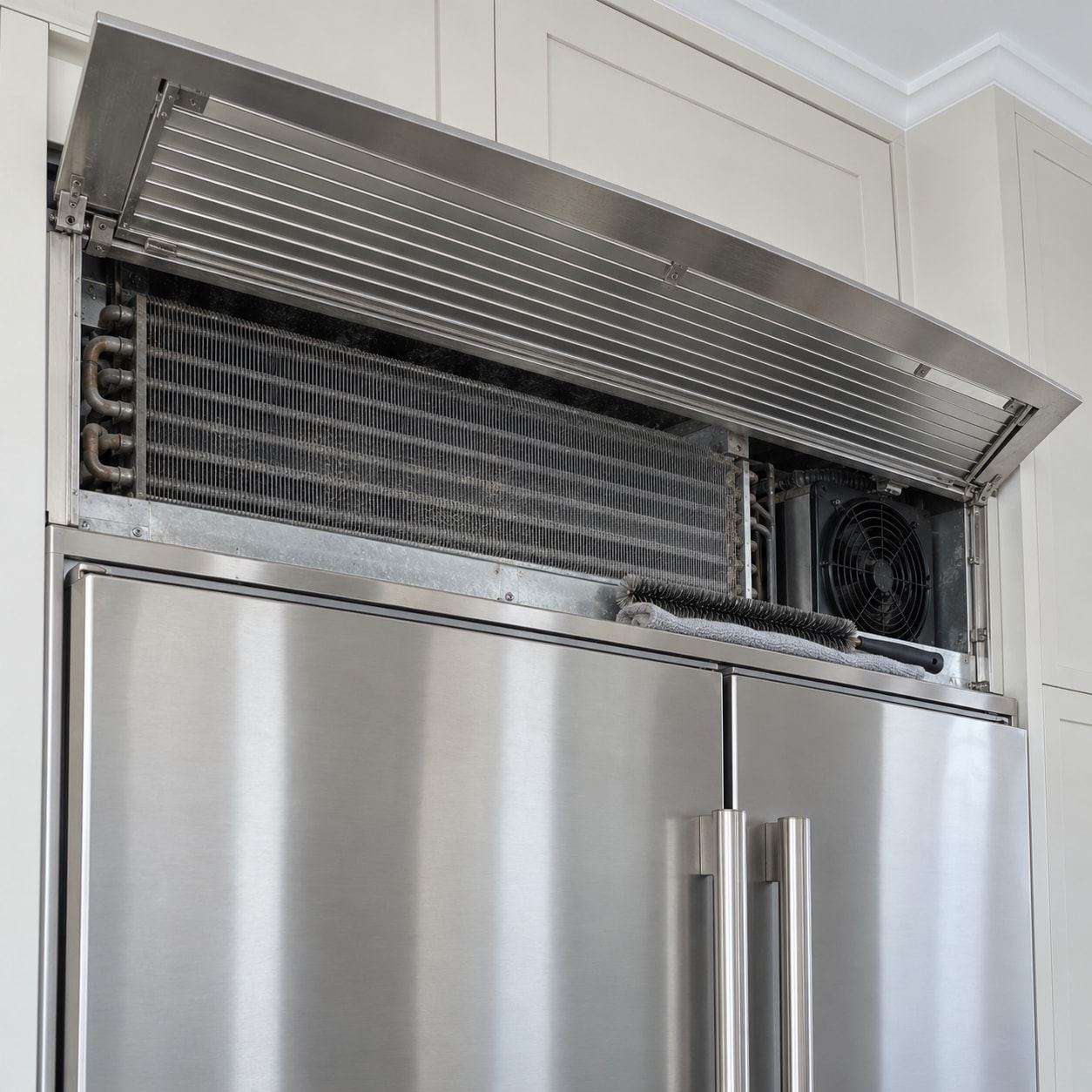
| Built-in (stainless, visible grille) | Flush with the cabinets, grille and service area at the top | Working at height on the condenser and fans, protecting the counters and floor, checking that nothing has been stored on or against the grille |
| Integrated (behind cabinet panels) | Custom wood or lacquer panels that match the kitchen | The extra weight of the panel on the hinges and door closers, removing and refitting panels without marking them, keeping the panel gap even |
| Freestanding | Open sides and a wall behind | Clearance at the back and sides, the level of the cabinet, the water line behind the unit if it has one |
| Column pair (refrigerator + freezer) | Two units side by side, sometimes with a wine column | Confirming which column is at fault and that the gap between them is not trapping heat; one visit covers every Sub-Zero appliance in the kitchen |
Two things people tell themselves
-
Often heardIf the freezer is fine, the refrigerator will sort itself out after I unplug it and let it defrost.
What actually happensA full power-off melts the ice that was choking the evaporator, so cooling often comes back for a few days. The heater, defrost thermostat or control that let the ice build up is still faulty, and the frost returns. Meanwhile everything in the freezer warmed up for nothing.
-
Often heardTurning the setting colder will fix a warm refrigerator.
What actually happensA colder setting only makes the system run longer. If air cannot cross a dirty condenser or a fan has stopped, the section stays warm while produce at the back starts to freeze. Leave the setting where it was so the technician sees the real behaviour.
Worth checking before you call
None of this needs tools or a manual. If one of these explains the problem, you may not need us at all.
- The door closes on its own and the gasket sits flat all the way round, with no tall bottle or drawer edge holding it open
- Nothing is stacked on, leaning against or hanging in front of the ventilation grille
- The temperature setting has not been changed by someone else in the household or a cleaner
- The circuit breaker for the refrigerator has not tripped in the electrical panel
- Food is not packed tight against the back wall, where it can block the air vents inside
- If there is water, note whether it is inside the cabinet, under the drawers or on the floor in front
Refrigerator questions people ask us
- How soon can a technician look at my Sub-Zero refrigerator?
- The line is staffed 24/7, while house calls happen daily, 8 AM–6 PM. During that conversation we give you the first open window for your address. If it is late at night, we will talk you through keeping the food cold until the morning visit.
- Can I keep food in the refrigerator while it is running warm?
- Keep the door closed and move the most perishable items, such as raw meat, fish and dairy, to the freezer side or a cooler. A refrigerator that cannot stay at or below 40°F is not a safe place for them. Everything else can wait in the cabinet until the visit.
- What temperature should a Sub-Zero refrigerator be set to?
- We suggest 38°F for the fresh-food section and 0°F for the freezer. If your readout shows that setting but a thermometer on the middle shelf reads several degrees higher, that difference is useful information for the technician. More on settings in our temperature guide.
- Do I need to empty the refrigerator before you arrive?
- No. Clear the shelf in front of the back wall if you can, and have a cooler ready in case the technician needs to reach the evaporator cover. We will tell you on the phone if your symptom usually means opening the inside.