NeighborhoodOld Town
Old Town houses, modern Sub-Zero cold
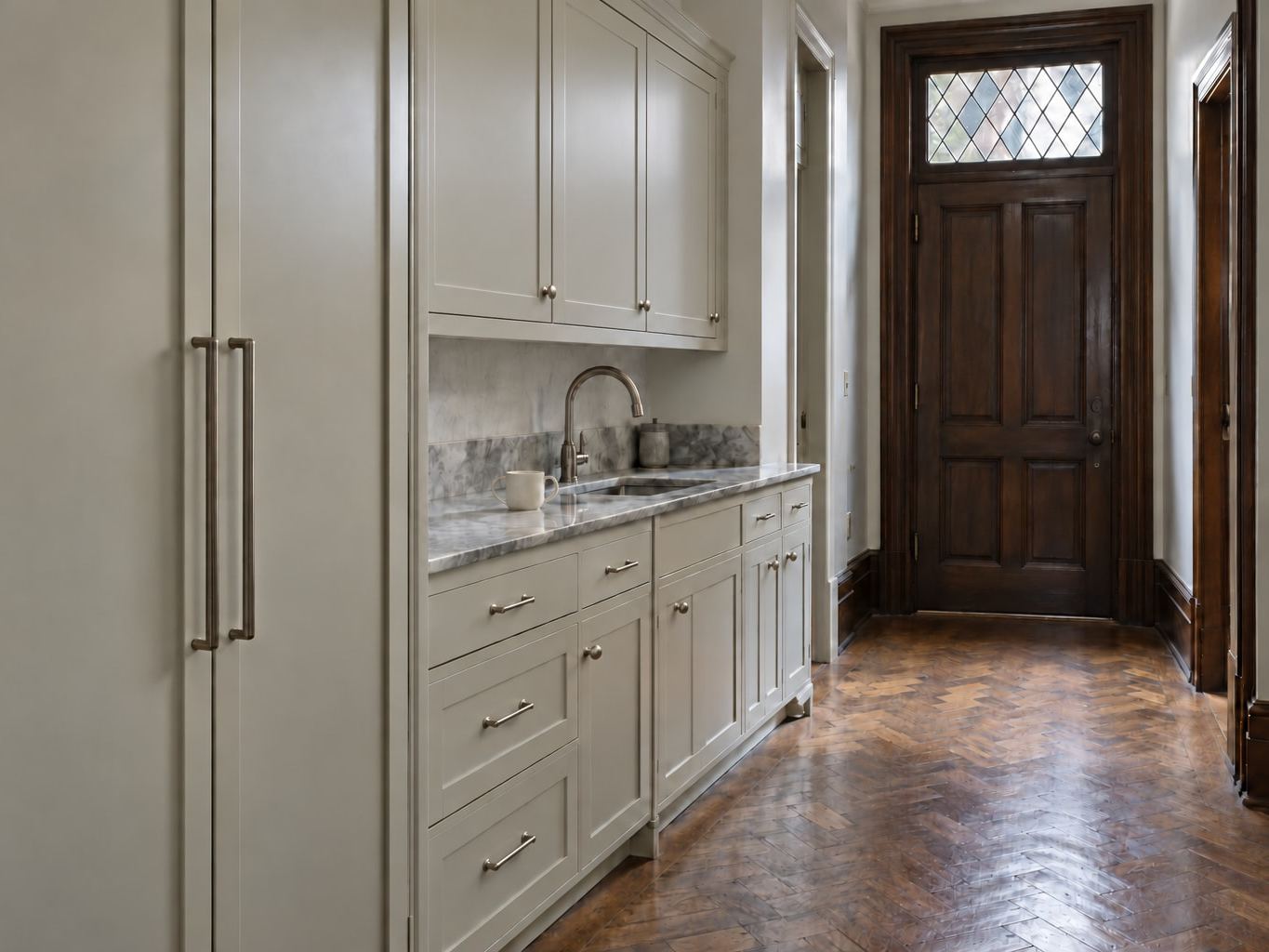
Many Old Town kitchens hide a Sub-Zero behind wood panels that were made to match a century-old house. Repairing it means respecting both: the refrigeration system and the room it was built into.
4.9 out of 5 from 150 client reviews Rating details
The houses we visit in Old Town
Old Town is mostly low-rise and residential, and its kitchens were rarely laid out with built-in refrigeration in mind. That shapes every visit.
-
Victorian row houses
Narrow, deep houses where the kitchen is often at the back or one floor up, reached through a slim hallway or a turning stair. Panel-ready Sub-Zero columns are often set into cabinetry built to echo the original trim.
-
Brownstones and greystones
Masonry homes renovated over several decades, so the wiring and plumbing behind a new kitchen can be a patchwork of eras.
-
Townhouse rows
Newer attached homes with garage access and more standard kitchens, but often an undercounter unit or wine storage on a second level.
-
Single-family homes and mid-rise condos
Detached houses with larger kitchens, and small condominium buildings where a manager may want notice of a contractor.
What owners of older houses tend to fear
-
Often heardA built-in Sub-Zero has to come out of the cabinetry to be repaired.
What actually happensMost diagnosis and many repairs are done from the front. On built-in models the condenser and much of the machinery sit behind the grille above the doors; on many integrated columns the service area is at the toe kick. Fans, controls, defrost parts, gaskets, ice makers and condenser cleaning rarely require pulling the unit.
-
Often heardTouching the unit means damaging the custom panels.
What actually happensPanels are protected before work starts, and if one has to come off it is removed and rehung on its own mounting. A panel that sits slightly off is itself a common reason the door gasket stops sealing.
-
Often heardIf an old house has problems, the refrigerator is probably the culprit.
What actually happensSometimes the house is. A shared circuit, a loose outlet or weak water pressure can make a healthy unit look faulty. We check what feeds the Sub-Zero before blaming a part.
Help the technician reach your kitchen
Historic houses are lovely to visit and tricky to work in. These details, shared when you book, make the visit smoother.
- Where the technician can park: your own spot, a garage, or the nearest legal street parking.
- Which entrance to use, and whether the kitchen is on the main floor, upstairs or at garden level.
- Any tight turns on the stairs or narrow doorways between the entrance and the kitchen.
- Where your electrical panel is, so the circuit to the unit can be checked or switched off safely.
- Where the water shutoff for the ice maker or dispenser is, if you know.
- Which series you have if you know it, Classic, Designer or Pro, and whether the doors carry wood panels.
- Any other Sub-Zero units in the house that are acting up; one visit can cover all of them.
Old wiring, old pipes and a refrigerator that runs all year
A Sub-Zero runs day and night, every day, for many years. Built-in refrigeration is meant to sit on its own grounded circuit. In a house that has been renovated in stages, it sometimes shares a circuit with other kitchen equipment, or plugs into an outlet that was added without much thought. When the compressor starts while something else draws power, the voltage dips, and over time that is hard on the start components and the control board.
Water is the other half of the story. The ice maker and any dispenser are fed through a small supply line, and in older houses that line may connect to aged pipes, run a long way from the nearest fixture or tap in through an old saddle valve. Low or uneven pressure gives small or hollow ice; sediment can clog the filter or the inlet valve; a weak fitting can drip behind a panel where nobody sees it until the floor stains.
None of this means an older house is a bad home for a Sub-Zero. It means a good repair looks past the box. When we find a supply problem, we say so plainly, so you can call an electrician or plumber for that part instead of paying for refrigerator parts that would not help. For the units themselves, the refrigerator repair page and the Sub-Zero series overview explain what we work on.
How a visit to a private house unfolds
No two houses are alike, so we do not promise how long each stage takes. The order, though, stays the same.
-
When you call
We ask what the unit is doing, which model or series it is, and how to get into the house and to the kitchen. Calls are answered 24/7.
-
Before the visit
You get a time window within our visit hours, daily, 8 AM–6 PM. If it helps, you share photos of the label or the installation.
-
Arrival
The technician parks where you told us, brings tools up in as few trips as possible and protects the floor and panels around the unit.
-
Diagnosis
The unit is tested in place, along with the circuit and the water supply if they could be involved.
-
Before any repair
You hear what failed and the exact price. The $89 service call is credited to the repair, and nothing is done without your yes.
-
Afterwards
If a part has to be ordered, the return visit is booked. If not, the repair is finished and the kitchen is left the way it was.
Old Town owners also ask
- Our kitchen is at the back of a row house, up a turning stair. Can a built-in column still be repaired there?
- Yes. Tell us the route from the front door to the kitchen when you book. Panel-ready columns in Old Town are often set into cabinetry built to match the original trim, so the technician works from the front of the unit and keeps the panels on wherever the repair allows.
- What should I do if my Sub-Zero starts sparking or smells like it is burning?
- Switch off the circuit at the electrical panel, do not touch the unit with wet hands, and keep the doors closed to hold the cold. Then call us 24/7. In an older house, also mention it to an electrician; a scorched outlet or plug is a wiring issue as much as an appliance one.
- Do you cover the neighborhoods around Old Town?
- Yes. Our base is the Gold Coast just to the east, and we also work in Lincoln Park to the north and River North to the south, among others. Book online or call us to find a time.