Sub-Zero repairBars and second kitchens
Sub-Zero undercounter repair for units built into tight spaces
An undercounter Sub-Zero lives boxed in by cabinetry and breathes through a small grille at floor level. That is why so many of its faults start with the installation around it, and why we look at the space before we look at the parts.
4.9 out of 5 from 150 client reviews Rating details
Small unit, different problems
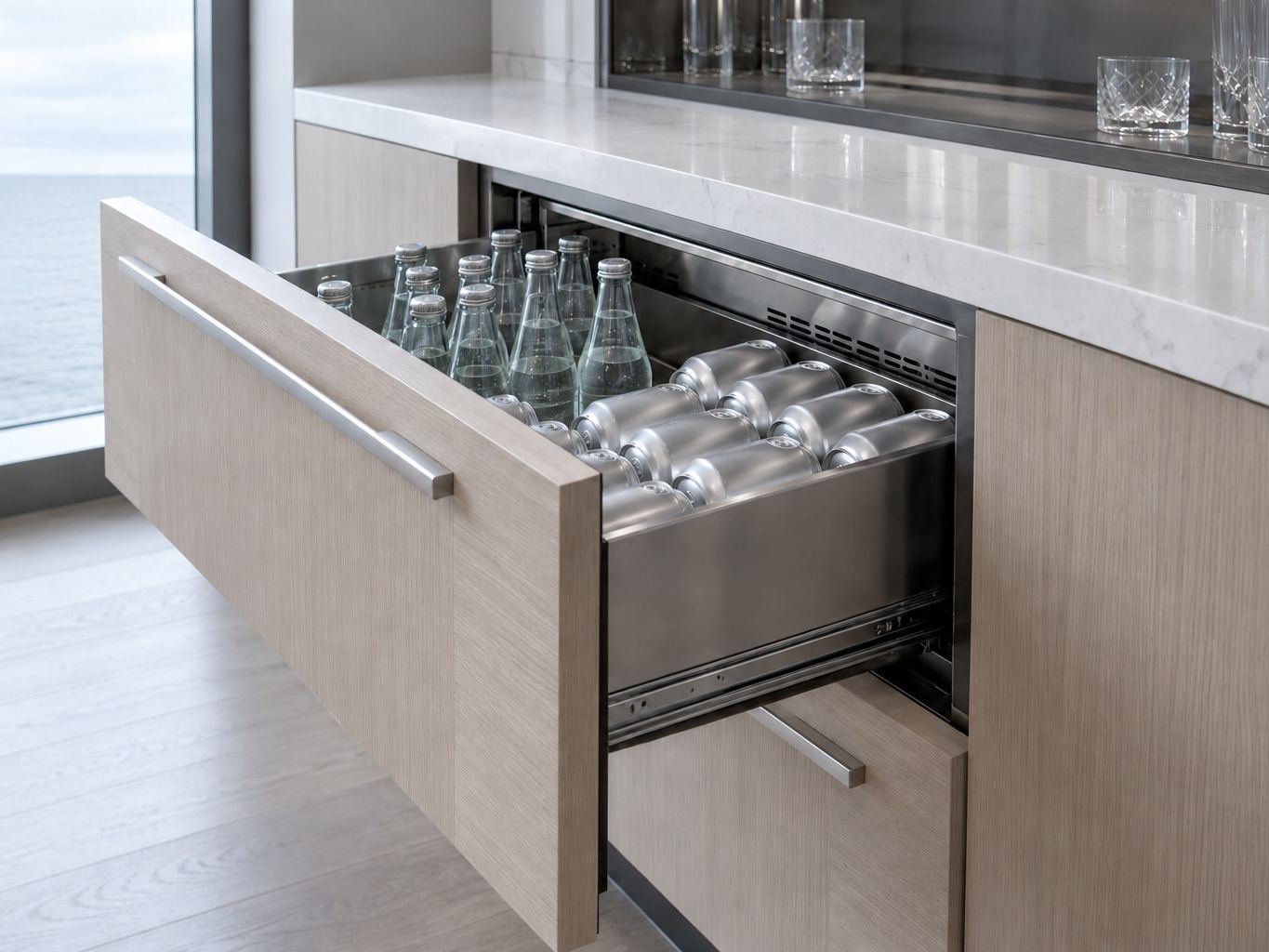
Undercounter refrigerators, freezers, beverage centers and wine modules use the same refrigeration ideas as a full-size Sub-Zero. What differs is how they get air, how you reach them and what usually goes wrong.
Undercounter module
- Pulls and pushes air through a grille near the floor, right where dust, lint and pet hair collect
- Surrounded by cabinets on three sides, often next to warm appliances, hot-water pipes or a sunny bar window
- Small cabinet, so opening a drawer for drinks changes the inside temperature quickly
- Door or drawer alignment is tight; a millimetre of sag can break the seal
- Service happens on knees, in place, without pulling the unit out if we can avoid it
Full-size refrigerator or column
- Machinery and condenser usually reached through a grille at the top
- More open air around the service area
- Large interior volume buffers short door openings
- Faults lean more toward fans, defrost and controls than toward the installation
- Covered on our refrigerator and freezer pages
With undercounter units, a big part of the diagnosis is the box the appliance sits in. A perfect repair inside a cabinet that cannot breathe will not last.
Faults we see under counters
These six show up again and again in wet bars, media rooms, pantries and second kitchens around the Near North Side.
- Drinks only cool, not cold
- Likely cause Condenser starved of air or caked with dust, or a heat source next to the cabinet See the repair
- Unit runs constantly and the toe-kick area feels warm
- Likely cause Ventilation blocked by trim, a rug or items stored in front of the grille
- Door swings shut but springs back slightly, or a drawer sits crooked
- Likely cause Hinge or slide out of adjustment, a torn gasket or a panel that has added weight to the door
- Water on the floor in front of the bar
- Likely cause Condensate drain blocked along its short, tight route under the unit
- Frost on the back wall of a refrigerator drawer
- Likely cause Warm air getting in past the seal, or a defrost or sensor fault
- Setting reads correctly but the bottles feel warm
- Likely cause Thermostat or sensor out of calibration; small cabinets show the error fast
Ventilation and clearance check for owners
These are safe for anyone to do and they often explain a weak undercounter unit. For the full condenser cleaning routine, see our step-by-step guide.
- Nothing sits in front of the lower grille: no rug edge, shoe rack, case of water or decorative trim
- The grille itself is not matted with dust or pet hair
- There is no heater vent, wine cooler exhaust or sun-baked window pointing straight at the cabinet
- The door or drawer closes flat with no bottle, glass or tray in the way
- The unit is not jammed so tight that its cabinet panel rubs when the door opens
- The setting has not been nudged by guests or cleaners at the bar
How we work around your cabinetry
Undercounter units are usually built into custom millwork, often with matching panels. The plan below keeps the repair inside the appliance and the marks off the woodwork.
-
Look at the installation
Before touching the unit, the technician checks the grille, the gaps around the cabinet, nearby heat and what is stored in front. Sometimes the cause is already clear at this point.
-
Test it where it stands
Temperatures, fans, the compressor, the drain, the gasket and the controls are tested in place. Pulling a built-in unit out of finished cabinetry is avoided unless the repair truly needs it.
-
Agree the plan
You hear what failed, what access the repair needs and what it costs, then decide. The $89 trip charge is deducted if you go ahead.
-
Repair with the panels protected
Floors and panels are covered, panels are removed and refitted carefully, and parts are matched to your model number; if one needs ordering, we book a return visit.
-
Set it up to last
The technician adjusts the door or drawers, confirms the unit pulls down toward its setting and tells you plainly what in the installation would help it breathe better.
Undercounter questions people ask
- Which Sub-Zero undercounter units do you repair?
- Undercounter refrigerators and refrigerator drawers, undercounter freezers and freezer drawers, beverage centers and undercounter wine storage. For full-height wine columns, see wine storage repair.
- Is an undercounter repair harder than a full-size one?
- The parts are not harder, the access is. Components are packed close together and the unit is boxed in by cabinetry, so the technician works in place and takes care with panels and floors.
- How often should the condenser on an undercounter unit be cleaned?
- Every six to twelve months, closer to six if you have pets or there is renovation dust in the building. Units at floor level gather dust faster than full-size ones. A maintenance visit can take care of it.
- Do you need to pull the unit out of the cabinet?
- Usually not. Most diagnosis and many repairs are done in place. If a repair does need the unit out, we explain why and agree it with you before anything is moved.
- What does the visit cost?
- One $89 charge for the trip, however many Sub-Zero units are checked, and it comes off the repair if you approve one. The full figure is quoted once the unit has been inspected; see how pricing works.