Sub-Zero repairIce makers
Sub-Zero ice maker repair, traced link by link
Every cube starts at a shutoff valve behind the cabinet and ends in the bin. When the ice stops, shrinks or drips, the fault sits somewhere on that path, and the visit is about finding exactly which link let go.
4.9 out of 5 from 150 client reviews Rating details
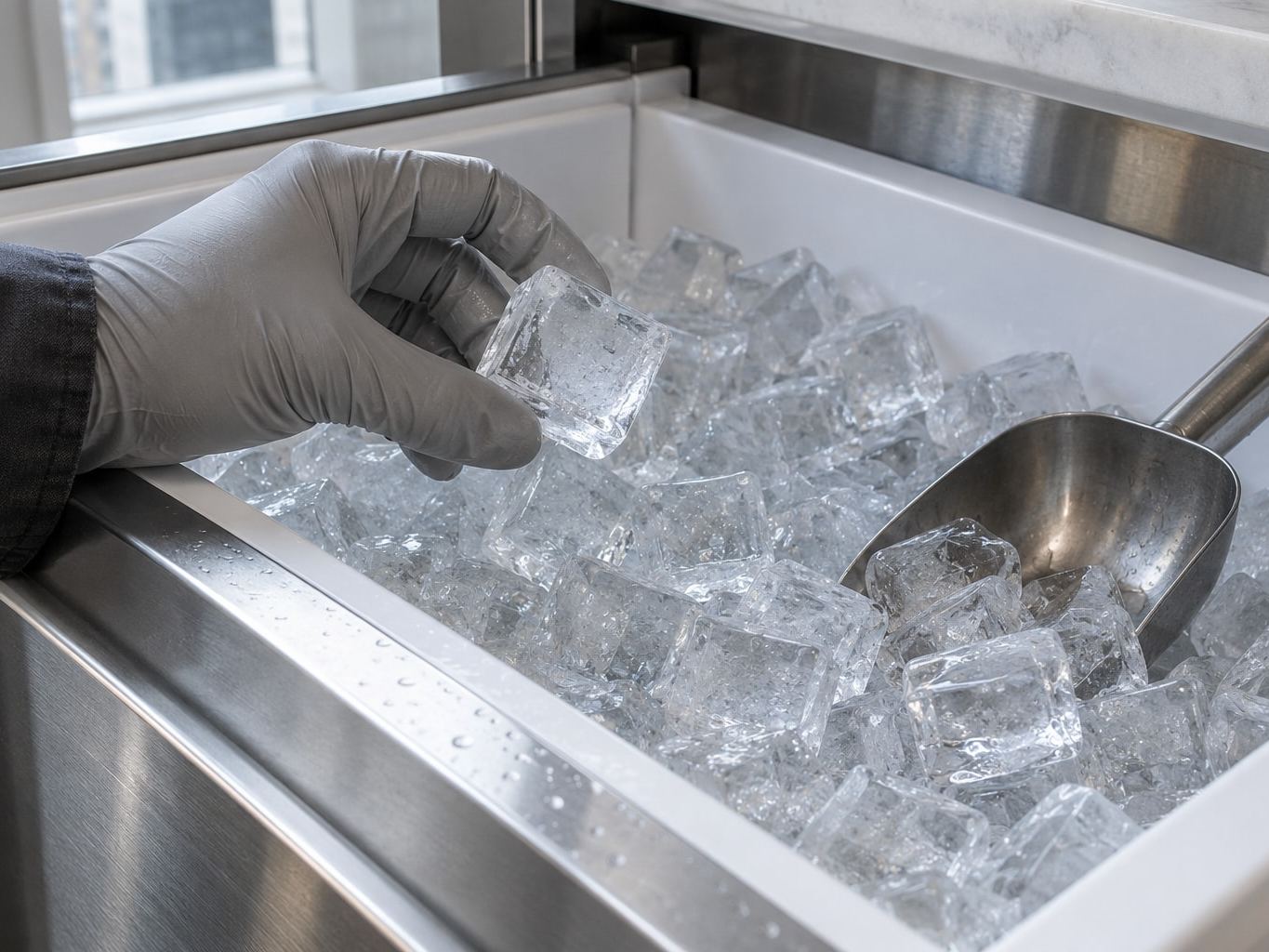
The water chain, checked in order
A technician works from the wall toward the bin, because a fault early in the chain makes every part after it look broken. The first three links are ones you can look at yourself before you pick up the phone.
-
Supply valve and water line
The shutoff that feeds the unit — in many Gold Coast kitchens it hides inside the neighbouring cabinet or under the sink — has to be fully open. We trace the line for kinks left when the unit was pushed back into its opening, and for spots where a drawer or panel pinches it.
-
Water filter
A cartridge past its change date restricts flow long before it blocks it outright. The usual interval is every 12 months, more often with hard water. A cartridge seated a quarter turn short can choke flow or weep at the housing.
-
Ice maker switch and freezer temperature
Depending on the model, ice production is switched on at the control panel or on the module itself, and a switched-off ice maker is worth ruling out before you book. The freezer should sit near 0°F; a warm freezer makes ice slowly or not at all.
-
Inlet valve
The solenoid valve at the back of the unit opens for a few seconds each cycle. We test its coil and measure how much water it actually passes — a valve can click open and still deliver too little.
-
Fill tube
The short tube that carries water into the freezer can freeze into a solid plug. We clear it safely, then find out why it froze: a valve that drips between fills, warm air slipping in around the tube, or a cold spot at the outlet.
-
Module and harvest
The module fills the mold, waits for the freeze, warms the mold just enough to release the cubes and sweeps them into the bin. We check its thermostat, heater and motor, plus the arm or sensor that tells it the bin is full.
What the bin is telling you
Each symptom narrows the search to a few links. Read across, then match it to the chain above.
- Bin stays empty, no sound of water after a harvest
- Likely cause Water isn't arriving: closed supply, blocked filter, failed inlet valve or a frozen fill tube
- Only a handful of small cubes a day
- Likely cause Restricted flow or a freezer running warm; a tired module can also stretch the harvest cycle See the repair
- Hollow or half-moon cubes with thin shells
- Likely cause Too little water per fill: low household pressure, an aging filter or a weak inlet valve
- Cloudy or chalky-looking cubes
- Likely cause Dissolved minerals in the water or a filter that is overdue for replacement
- Cubes fused into one solid block
- Likely cause Ice partly melted and refroze: a door left ajar, a defrost fault or a power interruption
- Full bin but nothing comes out of the dispenser
- Likely cause Auger motor, dispenser door solenoid or the door switch on models with a through-door dispenser
- Water on the freezer floor or under the unit
- Likely cause Cracked line, loose fitting, a seeping inlet valve or overflow from a mold that isn't level See the repair
Three things owners often get wrong
-
Often heardA new filter fixes every ice problem.
What actually happensA fresh cartridge helps only when the old one was the restriction. If the inlet valve is weak, the fill tube keeps freezing or the module has stopped harvesting, a new filter changes nothing — and one that isn't fully seated can start a new leak.
-
Often heardIf the ice maker hums, it's working.
What actually happensA motor can run its whole cycle over an empty mold. Listen a few seconds after cubes drop: you should hear water filling. Silence at that moment points back up the water chain, not at the motor.
-
Often heardTurning the freezer colder makes more ice.
What actually happensA colder setting does nothing for a mold that receives too little water, and very cold air around the fill tube makes freeze-ups more likely. Keep the freezer near 0°F and fix the restriction instead.
What you can check, and what the visit covers
Work down the middle column first. If everything there looks right, the fault is past the point where an owner can safely go.
| Link in the chain | You can check | On the visit we |
|---|---|---|
| Supply valve | Valve fully open; line not kinked behind the unit | Test flow at the valve, inspect fittings and the route of the line |
| Water filter | Change date; cartridge seated all the way | Compare flow with and without the filter to rule it in or out |
| Ice maker switch | Switched on at the panel or on the module | Confirm the control actually powers the module |
| Freezer temperature | Display near 0°F; door swings shut on its own | Measure real temperature at the module, check gasket and airflow |
| Inlet valve | Listen for a click and water after each harvest | Test the coil and measure what the valve delivers |
| Fill tube | Look for an ice plug where the tube enters the mold | Thaw it safely, find why it froze, correct the cause |
| Module and dispenser | Bin seated; shutoff arm down | Test thermostat, heater, motor, auger, solenoid and door switch; fit parts matched to your model |
Ice maker questions owners ask
- Should I throw away the first ice after a repair or a new filter?
- Yes, it's a good habit. The first batches after a filter change, a new valve or a cleared line can carry air, fine carbon from the cartridge or a flat taste. Discard them, then judge cube size and clarity once production settles.
- Can I just swap the ice maker module myself?
- On some models it's physically possible, but a new module won't fix a supply, valve or freezer problem, and those cause most no-ice calls. Pulling the module also means working next to the water line and wiring inside a built-in unit. We confirm what actually failed first, so you don't buy a part that was never the problem.
- How often should the water filter in a Sub-Zero be changed?
- Every 12 months is the usual interval, and sooner if your water is hard or the ice slows down or starts to taste different. Write the install date on the cartridge — it's the easiest link in the whole chain to keep healthy.
- Why does my ice taste or smell strange?
- Ice soaks up odours from uncovered food in the freezer and picks up taste from an old filter or water that sat in the line. Replace the filter, dump the old ice and cover what's stored nearby. If a fresh filter doesn't help, the line or the module may need attention on a visit.
- Can I thaw a frozen fill tube with a hair dryer?
- No. Do not use a hair dryer or any other heat inside the unit: direct heat can warp the plastic liner and fill parts, and melt water can reach wiring. Turn off the water supply to the ice maker, leave the ice in place and call us; the tube freezes again unless the cause is fixed, usually a valve that drips between fills or warm air leaking in around the tube. For the owner-side checks, see our ice maker troubleshooting guide.