Sub-Zero repairWine columns and units
Sub-Zero wine storage repair that starts with the bottles
When a wine unit fails, the appliance can be fixed; a case that cooked for a week cannot. So we start with keeping the collection steady, then find out why the unit stopped holding its zones.
4.9 out of 5 from 150 client reviews Rating details
First hour: keep the collection calm
Wine copes with a slow, small drift far better than with sudden swings. If the readout is climbing, the most useful thing you can do is nothing dramatic: keep the glass door closed, leave the bottles where they are and resist the urge to shuffle racks to find the cold spot. Each opening lets warm, humid kitchen air in and makes the temperature jump.
If the unit is clearly warming fast, move the bottles you care about most, the ones meant for long ageing, to the coolest, darkest place you have: an interior closet, a basement storage locker, a cool room away from windows. A short stay in a kitchen refrigerator will not ruin most wines, but it is colder and drier than they want for long, so treat it as a stopgap.
Then write down what you see: the zone readouts, any sound, droplets on the glass or on the bottles, and whether the problem is in the upper zone, the lower zone or both. That list tells the technician where to start and cuts the time the door stays open during the visit.
When we come out, we work with the door open as briefly as possible, move only the bottles that block access, and put them back where they were. You stay in charge of the collection; we handle the machine.
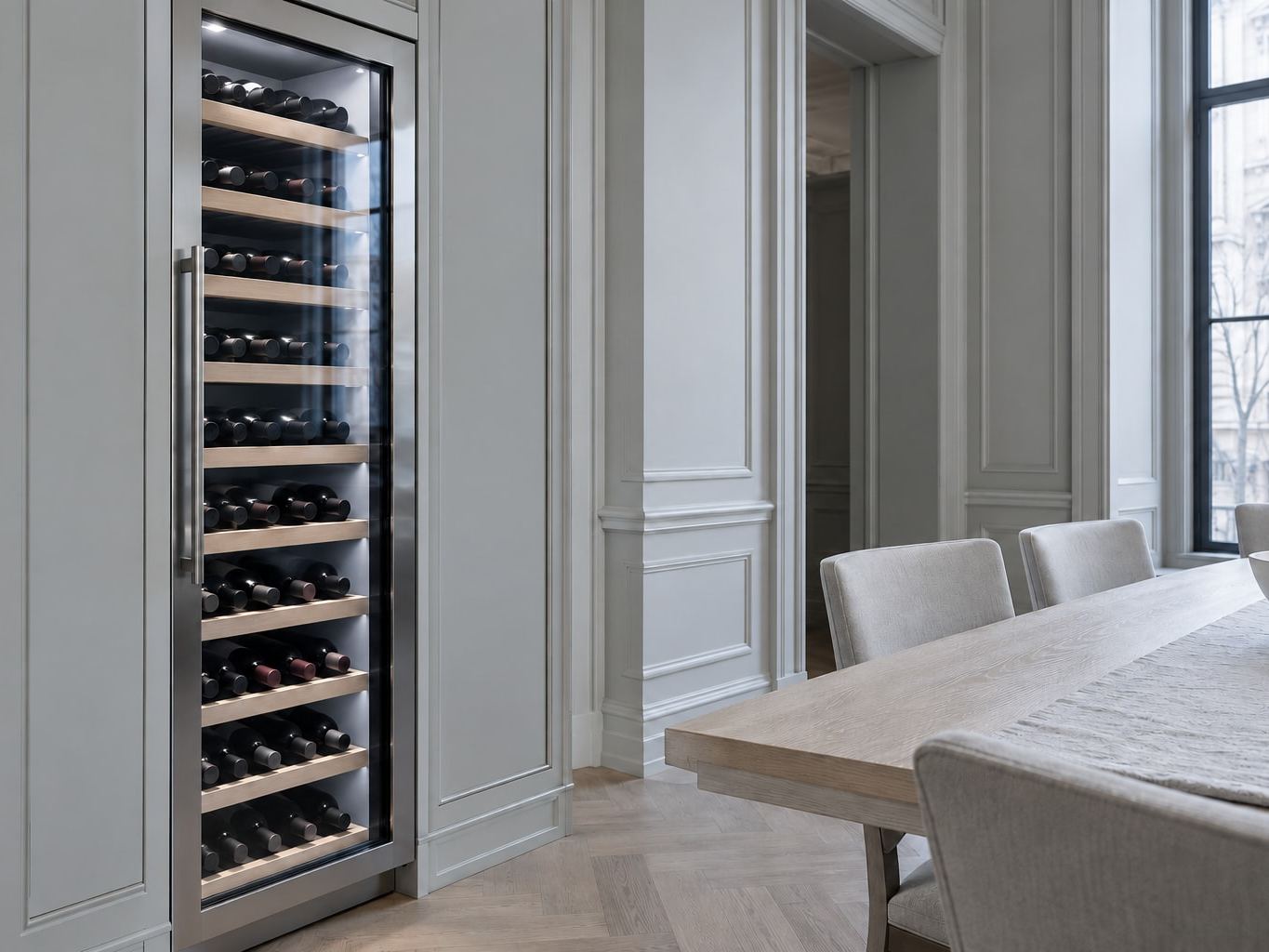
Temperatures we set and check
These are the ranges we work to when we calibrate a unit after a repair. Your own preference wins, as long as it stays steady.
| What is stored | Range we work to | How it plays out in a Sub-Zero unit |
|---|---|---|
| Red wines | 55–65°F | Usually the warmer zone of a dual-zone column |
| White and sparkling wines | 45–55°F | Usually the cooler zone; sparkling at the low end |
| Mixed collection, single zone | About 55°F | A middle setting both styles tolerate for long storage |
| Overall span for wine | 45–65°F | Below or above this, something is wrong or set by mistake |
| Humidity | 50 to 80 percent | Too dry dries corks; too damp grows mould on labels and racks |
Signs the unit needs a technician
Some of these are obvious. Others, like a faint vibration or a few droplets, are easy to live with and slowly hard on the wine.
- Zone readout wanders several degrees through the day
- Likely cause A sensor reading wrong, a fan that starts and stalls, or a control board losing its setting
- Corks look dry or shrunken, or mould spots appear on labels
- Likely cause Humidity is out of range: a blocked drain, an airflow fault or a door that no longer seals
- A hum or buzz you can feel through the glass
- Likely cause Worn compressor mounts, a failing condenser fan, a rack that is loose or the unit touching its cabinetry
- Glass door fogs or the gasket has a visible gap
- Likely cause Damaged door seal or a hinge that has dropped; the UV-filtering glass door then lets warm air and light in
- Droplets on bottles or on the inside walls
- Likely cause Seal failure or a temperature difference between zones that the controls are not managing
- Display dark, stuck or not accepting a new setting
- Likely cause Control or display board, or a wiring connection behind the panel See the repair
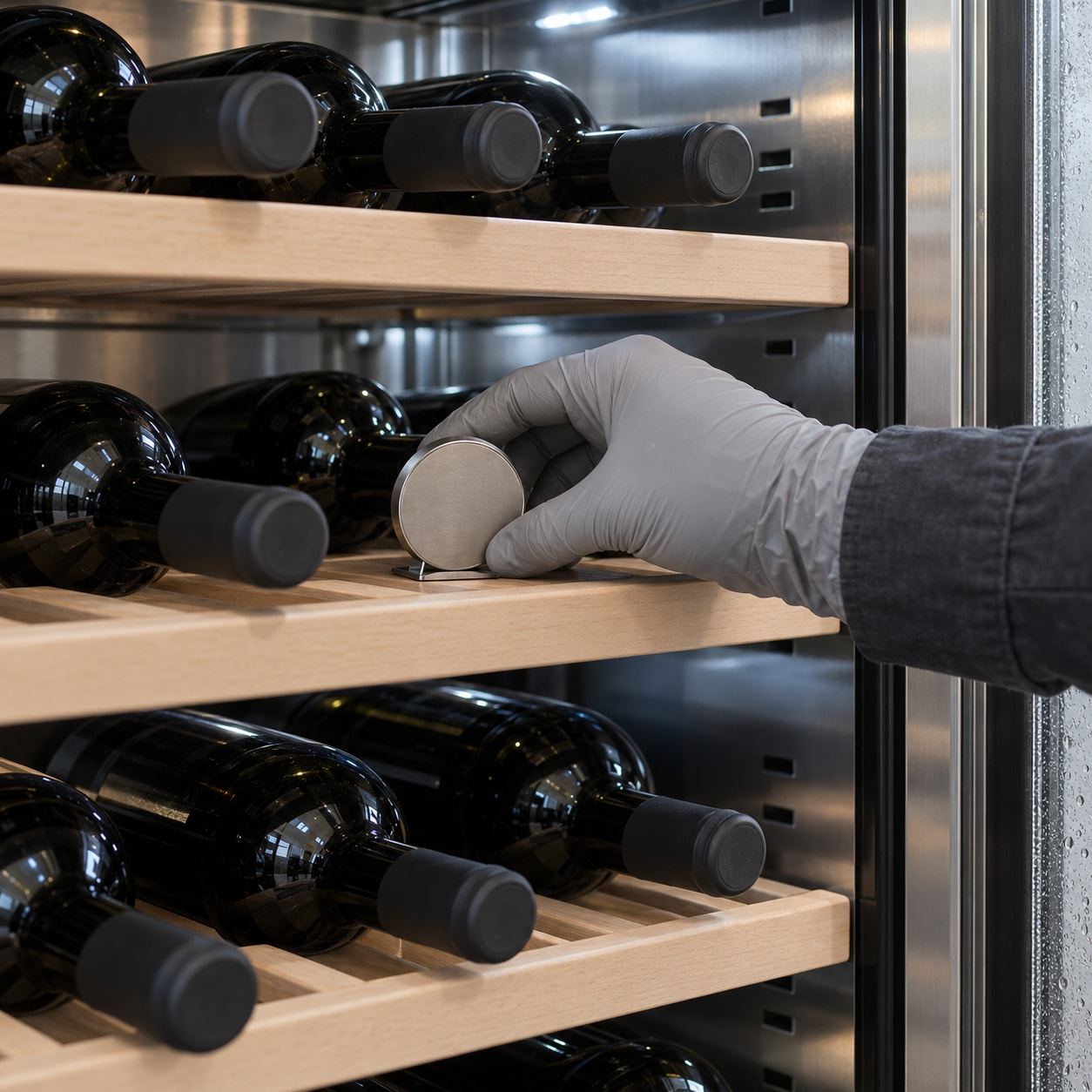
Five minutes of checks before you call
These rule out the simple causes. If one of them is the answer, you have saved a visit.
- The glass door closes fully on its own and nothing, such as a bottle neck or a rack edge, is pressing against it
- The ventilation grille is not blocked by a stool, a wine box or a rug
- No one has changed the zone settings; note what they read now
- The breaker for the unit is on and no other outlet in the room has gone dead
- The cabinet is not resting against a wall or panel that could carry vibration
- Racks are seated in their runners and bottles are not touching the back wall
What wine owners often get wrong
-
Often heardColder is always safer for wine.
What actually happensStable is safer. Wine kept too cold develops very slowly, and a zone that drops close to freezing can push corks out as the wine expands. A steady 55°F is kinder to a collection than a setting that swings to chase a colder number.
-
Often heardDroplets on the bottles mean the humidity is perfect.
What actually happensCondensation on glass usually points to a seal problem or a temperature difference the unit is not handling. Healthy humidity keeps corks supple without wetting the bottles or the labels.
-
Often heardA little vibration is just the compressor working.
What actually happensA quiet hum is normal. A buzz you can feel through the glass is not, and constant vibration disturbs the sediment in older bottles. It usually comes from worn mounts, a fan or the unit touching its cabinet.
Questions collectors ask before booking
- How often should a Sub-Zero wine unit be serviced?
- We suggest once every twelve months: a condenser clean, a check of the door seal, the drain and humidity, and a calibration of each zone. Units in dusty rooms or homes with pets may need the condenser cleaned sooner. See maintenance visits.
- Can you fix the glass door and its seal?
- Yes. We repair and replace door seals, hinges and door components on Sub-Zero wine units, including the UV-filtering glass doors. A sagging door is a common reason for fogging and a warm upper zone.
- Will you need to take all the bottles out?
- Rarely. Most work happens at the grille, the controls or the door. If the technician needs to reach the back of the cabinet, we move only the racks in the way, with you, and return them in order. For long-term storage advice, read our guide to preserving a collection.